Reflections from Our Building Bridges Cohort: Leading with Connection and Care in Times of Uncertainty
By: Cassie Whitebread, Senior Consultant
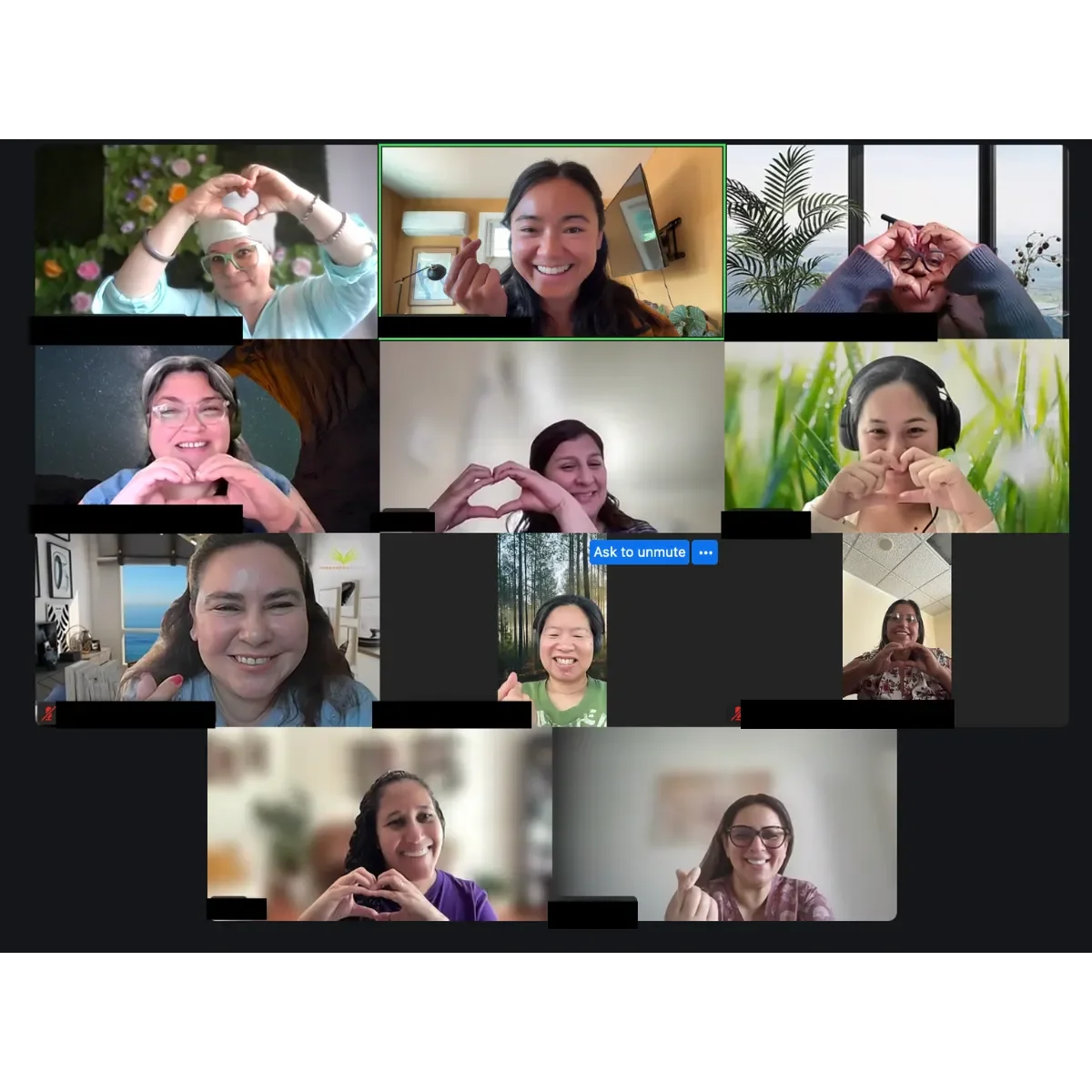
Zoom screenshot of the 2025 Building Bridges Cohort smiling and holding their hands up in heart formations.
We recently wrapped up our Building Bridges Cohort, a six-week journey designed to help leaders deepen their connections, grow their communication skills, and practice courageous bridge-building across differences.
In a time of deepening divides — across race, politics, generation, and lived experience — it’s more important than ever to build the muscles of trust, vulnerability, and relational courage in our workplaces (and beyond). Over six weeks, our participants practiced deep listening, honest communication, and feedback grounded in care. Together, we explored what it means to stay connected, especially when fear and uncertainty are high.
As we closed this cohort, here are a few learnings and reminders that emerged from our collective journey:
1. Connections within our organizations must be relational, not transactional or solely based on our roles.
In moments of fear or tension, it’s tempting to retreat behind our roles or professional identities. But when we take time to connect as people, not just coworkers or collaborators, we create the foundation for trust to flourish. Trust can’t grow in isolation; it grows through relationship. During times of crisis, we need that foundation of trust to move the work forward in ways that honor where we’re at as individuals experiencing a stress-inducing time.
2. Speaking of stress-inducing times… We can’t go about “business as usual.”
Even when the work feels urgent, we must pause and acknowledge the emotional climate we’re in. We’re living through a polycrisis — a time of overlapping global and local challenges that amplify fear and anxiety. Authentic leadership means slowing down enough to recognize what’s happening in and around us, and adjusting how we show up for one another.
3. Leaders need to model vulnerability.
When leaders admit fear, uncertainty, or the limits of their knowledge, it opens space for others to do the same. Vulnerability isn’t a weakness; it’s an act of courage that builds psychological safety.
4. “Clear is kind.” And even more, clear and consistent is kind.
As Brené Brown reminds us, clarity is an act of care. In times of fear, consistent and transparent communication becomes essential. Anxiety grows when decisions are made behind closed doors. When we over-communicate, especially when things feel uncertain, we build collective steadiness.
5. Slow down before solving.
Our minds often rush to find solutions as a way to manage discomfort. But sometimes, what’s needed first is space to process, feel, and be with what’s present. Making room for reflection and emotional honesty helps ensure that any solutions we do create are grounded in understanding, not reactivity.
6. Feedback is a practice.
In one of my past organizations, we built feedback muscles by asking at every single one-on-one meeting:
““Do you have any feedback for me?””
It was scary at first, but over time, it made feedback easier to give and receive. It also helped us celebrate each other more often, even for the small wins. Feedback, when normalized, becomes less about performance and more about the relationships.
Moving forward
Bridge-building isn’t a one-time effort; it’s a lifelong practice of returning to relationship, clarity, and care. As we look to future cohorts for 2026, we’re reminded that creating spaces for honest dialogue and connection is one of the most powerful antidotes to fear.
If you’re interested in being part of a future Building Bridges Cohort, or bringing this experience to your organization, reach out to us at Healing Equity United or sign up for our newsletter to stay up-to-date when our next cohort is announced.
Even in times of fear, our capacity to connect remains one of the most powerful tools we have. Each act of connection, no matter how small, is a quiet refusal to let fear define us.